
The Importance of the Hallway Chat
Mental Health Maine • Written by: Cornerstones of Maine
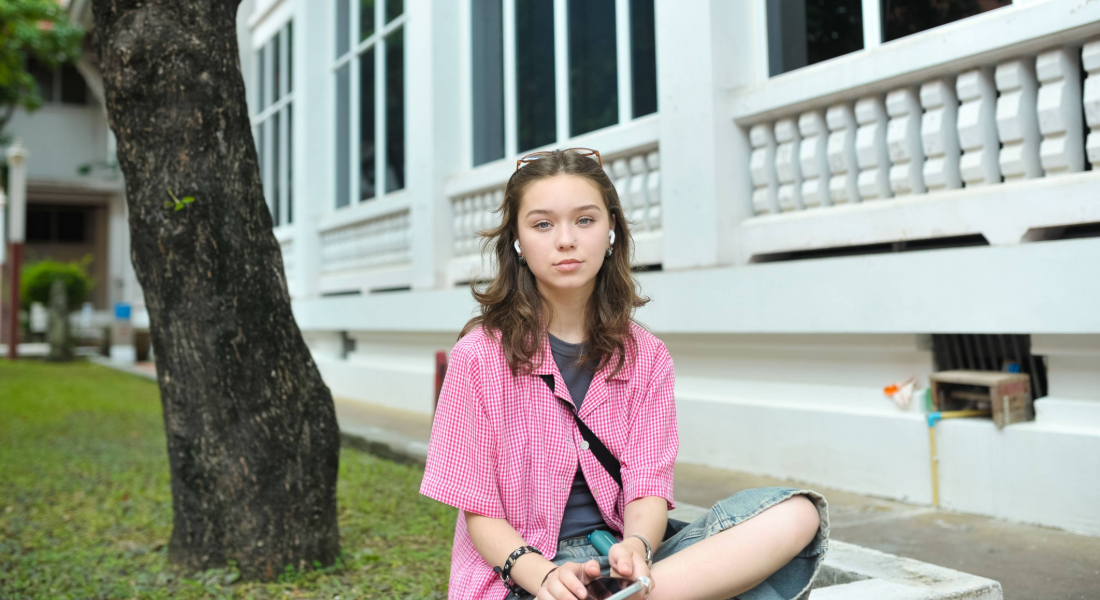
There is a moment that happens regularly at Cornerstones Harbor, though it is rarely documented in session notes. There’s a young person who is having a hard morning. Not a full-blown crisis. Just the low-grade friction of a day that started wrong and is threatening to stay that way. A staff member passes them in the hallway, reads the body language, and sits down on the floor next to them to shoot the breeze.
Nothing clinical happens, in the formal sense. No CBT protocol is deployed. Nobody takes out a worksheet.
And yet this is, in a very specific and research-supported way, exactly the treatment that is needed.
The Research On Between-Session Moments
Clinical psychology has spent most of its history focused on what happens inside the session. The research on what happens outside it is considerably younger, and considerably more interesting for what it reveals about where growth truly occurs.
A 2023 paper examining subacute community residential care noted that therapeutic interactions occur out-of-session in the interaction among clients themselves, friends, relatives, and staff throughout the day, and concluded that what happens out-of-session “cannot be underestimated” as a clinical variable. This position reflects what clinicians working inside residential milieu programs have observed for decades: the session is one data point. The day is the data.
A 2017 study published in Child and Youth Care Forum examined what predicted improved emotional and behavioral functioning in youth during therapeutic residential care. The answer was not only session attendance or therapeutic modality. It was the ratio of positive to negative staff interactions with youth throughout the day. Programs where staff maintained consistently more positive interactions across daily contact produced measurably better outcomes, independent of formal session content.
What happens in the hallway, at breakfast, during a drive to a community outing, these moments are not filler between the real work. They are part of it.
What Happens at the Dinner Table in a Milieu Program?
In a traditional clinical setting, dinner is dinner. In a milieu program, it is something else.
A young adult who has spent years eating alone, sits at the same table as people who are dealing with something related. The conversation is not facilitated. Nobody announces a therapeutic goal. But the nervous system is registering the experience of shared space without conflict, and it is filing that away. Each low-stakes moment of connection is evidence that connection is survivable.
Staff are present. Not to run the meal as a group session, but because their presence signals that the environment is safe, and because they can notice, in real time, when someone is struggling and respond before the struggle becomes a crisis.
A systematic review published examining staff-youth relationship quality across residential settings found that the quality of the everyday relationship between residential staff and young people is one of the most consistent predictors of positive outcomes in therapeutic care. The factors associated with better outcomes included staff warmth, responsiveness, and consistency across daily contact, none of which are variables that emerge exclusively in scheduled sessions.
What Happens During a Walk to the Store?
A young adult with executive dysfunction does not develop the capacity to manage a grocery run, navigate a crowded public space, regulate the low-level anxiety of an uncontrolled environment, or recover gracefully when something goes wrong by discussing these things in a session. They develop it by doing them, with support close enough to matter.
The walk to the store is the executive function practice. The community outing is the emotional regulation practice. The navigation of an unexpected change in plans is the cognitive flexibility practice. These are the same skills being built in individual sessions, but they are being tested and practiced in the environment where they need to work, which is the only environment where they actually stick.
Milieu Staff vs Traditional Therapists
In a traditional outpatient model, the therapist’s clinical responsibility begins when the client walks through the door and ends when they leave. The milieu model distributes that responsibility across the entire day and across an entire team.
This is why milieu staff work longer, less predictable shifts. It is why they are trained not only in clinical modalities but in how to be present, calm, and consistent across hours of ordinary daily contact. The clinical relationship at Cornerstones Harbor is not confined to the 50-minute session. It is built over breakfasts and difficult mornings and walks to the store and conversations in the hallway that nobody scheduled.
This is also why the Long-Term Transitional Living program works the way it does. As the young adult’s own capacity for self-direction increases, the daily staff presence decreases, but the model remains: the environment continues to be a clinical tool, designed to support skill-building in real contexts, not just to provide comfortable housing while sessions happen elsewhere.
The 50-minute hour is a good container. But it is a small one. What Cornerstones Harbor is built to offer is the rest of the day, designed with the same intention.
Families who want to understand what the full picture looks like can reach the Cornerstones of Maine admissions team at cornerstonesofmaine.com or by calling 207-300-9851.
Frequently Asked Questions
What is a milieu therapy program and how is it different from traditional therapy?
In traditional therapy, clinical work happens during scheduled sessions. In a milieu program, the entire environment, including daily staff interactions, peer relationships, shared meals, and community activities, is designed as a clinical tool. Research shows that what happens between sessions in a residential milieu setting is a significant predictor of outcomes, independent of formal session content.
What happens between sessions in a milieu residential program?
Staff are present throughout the day, not only during scheduled clinical hours. Meals, community outings, and daily routines are all designed to support the same skill-building that happens in individual therapy: emotional regulation, executive function, social connection, and real-world practice in supported environments.
Why do milieu staff work longer shifts than outpatient therapists?
Because the clinical relationship in a milieu program is not confined to a session. Research shows that the quality of daily staff contact, including warmth, consistency, and the ratio of positive to negative interactions throughout the day, is a measurable predictor of treatment outcomes. This requires a staffing model that maintains that quality across the full day, not just during formal programming.
How does Cornerstones Harbor use the milieu model?
Staff are present throughout each day, community outings are structured as clinical practice in real-world environments, and peer relationships are cultivated as part of the treatment. The model is carried into the Long-Term Transitional Living program, where structure decreases as the young adult’s capacity for independent functioning increases.