
'We Expected a Hospital. We Found a Home.'
Mental Health Maine • Written by: Cornerstones of Maine
Parents who have made appointments to see Cornerstones Harbor have usually spent months in the territory of desperate research. They have been through the lists, the phone calls, the insurance conversations. They have read enough program websites to know what language to expect. And they have a picture in their heads of what they are about to walk into, assembled from years of cultural imagery about what residential mental health treatment looks like.
They’re usually completely wrong.
What Families Expect
Research on parents accessing residential treatment consistently documents significant anxiety about what the experience will be like. A qualitative study published in Children and Youth Services Review interviewing twenty parents who had navigated the residential treatment process found that families entered the process with high levels of strain and uncertainty, and often struggled to understand what they were actually agreeing to for their child, particularly regarding the environment and daily experience of care.
That uncertainty tends to produce assumptions. Families assume the setting will be institutional. They assume their child will be isolated from normal life. They assume the staff will be clinical in a distancing way. They assume their own role will shrink to waiting.
Thankfully, most of these assumptions don’t survive the visit.
What Families Typically Find Instead
1. “I expected it to look like a hospital.”
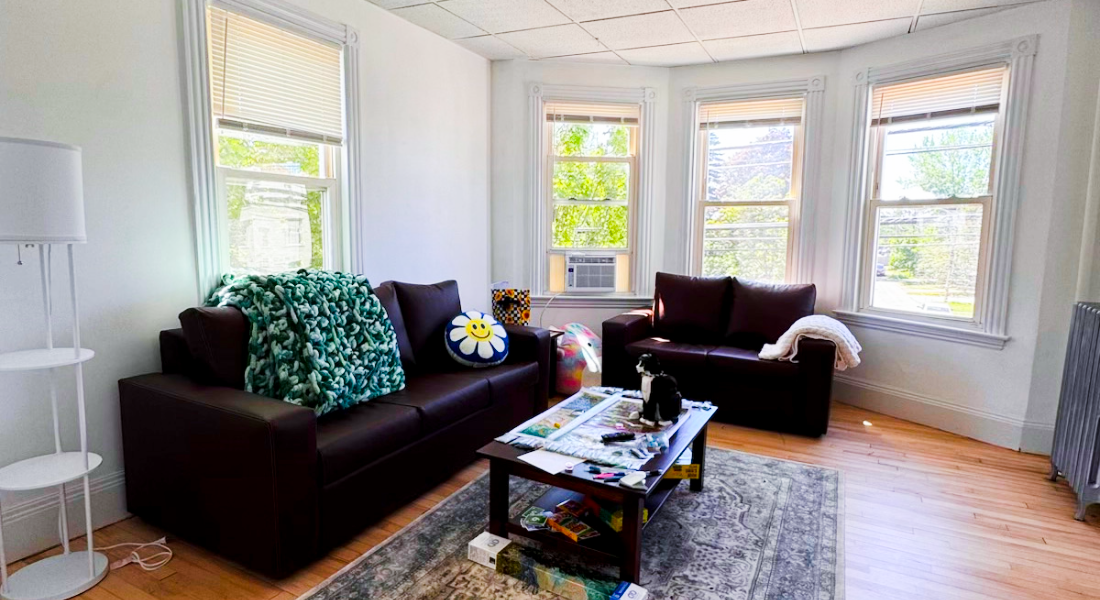
It doesn’t. Cornerstones Harbor is designed to feel like a home, because the clinical team understands that environment is not incidental to treatment.
The residential setting is a house, not a ward. There are shared meals, common spaces, real furniture, and the texture of daily domestic life. Families who arrived steeling themselves for something sterile often describe a physical unclenching when they walk through the door.
2. “I expected the staff to be formal and removed.”
What families more often encounter is staff who are present, warm, and available across the entire day, not just during scheduled appointments. This is the milieu model working as designed.
Clinical staff work alongside young adults in their daily environment, which means the quality of those relationships is built over hours of ordinary contact, not over carefully allocated session time. The staff presence that surprises families is the same staff presence the research identifies as clinically significant.
3. “I expected my child to be cut off from everything.”
What the program builds is a structured, supported community.
Community outings are a scheduled part of the week. Peer relationships form naturally inside the residential setting. Families often describe being surprised by how much normal life is present, including humor, teasing, meals together, activities that look, from the outside, like just living.
4. “I expected my role to disappear.”
Family sessions are built into the residential structure from the first week. The clinical team at Cornerstones Harbor works with families throughout the stay.
A group concept mapping study published in Psychiatric Services by Herbell and colleagues identified family engagement in residential treatment as a top priority for improving outcomes, finding that families want active involvement and that programs benefit measurably when they provide it.
5. “I didn’t expect to feel hopeful.”
Families arrive depleted from years of watching something go wrong and trying to fix it.
A qualitative study documenting parent and child perspectives after intensive psychiatric treatment found that the experience was viewed as a genuine “turn in the road” by most families, a meaningful catalyst for positive outcomes, even when the road itself remained difficult.
Something about seeing the community, the staff, the structure, the fact that other young adults are here and doing the work, shifts something in families that the brochure cannot.
The Importance of Touring
Family skepticism is not just an emotional variable. It directly affects treatment engagement, cooperation with the clinical team, and the relational environment a young adult returns to at discharge.
When families visit and find something that matches reality more accurately than the picture they arrived with, the downstream effects are real. They communicate differently with their young adults. They trust the process more. They are more likely to participate in family sessions in a way that is open rather than defensive.
If you want to understand what Cornerstones Harbor’s approach to residential treatment looks like in practice, and how the milieu model operates day to day, it is worth reading how the program describes what happens in the hallway, at dinner, and during a walk to the store, not just during scheduled sessions. The Long-Term Transitional Living program extends the same model with decreasing structure as the young adult’s own capacity grows.
The visit is not a sales experience. It is an opportunity to see something that is hard to convey in words. Families who want to schedule a time to see Cornerstones Harbor in person, or who want to speak with the admissions team before making that decision, can reach out at cornerstonesofmaine.com or by calling 207-300-9851.
FAQ
What should families expect when visiting a milieu-based residential program?
Most families arrive with expectations shaped by cultural images of institutional mental health settings. A milieu-based program is designed to look and function more like a home than a facility. Families typically find a home-like environment, staff present throughout the day, a peer community, and a role for themselves within the clinical process.
How is Cornerstones Harbor different from a standard residential treatment center?
Cornerstones Harbor is built on the therapeutic milieu model, where the entire daily environment, including peer relationships, staff interactions, routines, and community outings, is designed as a clinical tool. Treatment is not limited to scheduled sessions.
What role do families play during residential treatment at Cornerstones Harbor?
Family sessions are a clinical priority throughout the residential stay. Families are not placed in a waiting role. Research consistently shows that active family engagement during residential treatment is a significant predictor of better long-term outcomes.
What comes after residential treatment at Cornerstones?
For many young adults, the next step is the Long-Term Transitional Living program, where clinical structure decreases as the young adult’s capacity for independent functioning increases.